We first wrote this in early 2023, when generative AI had just become the thing everyone was talking about, and updated it in November 2026. It is a real leap. It has also picked up a pile of myths and a lot of fear along the way. Is it coming for human creativity? For people's jobs, and their artwork? We make things for a living, so we've asked ourselves the same questions. Here's where we've landed.
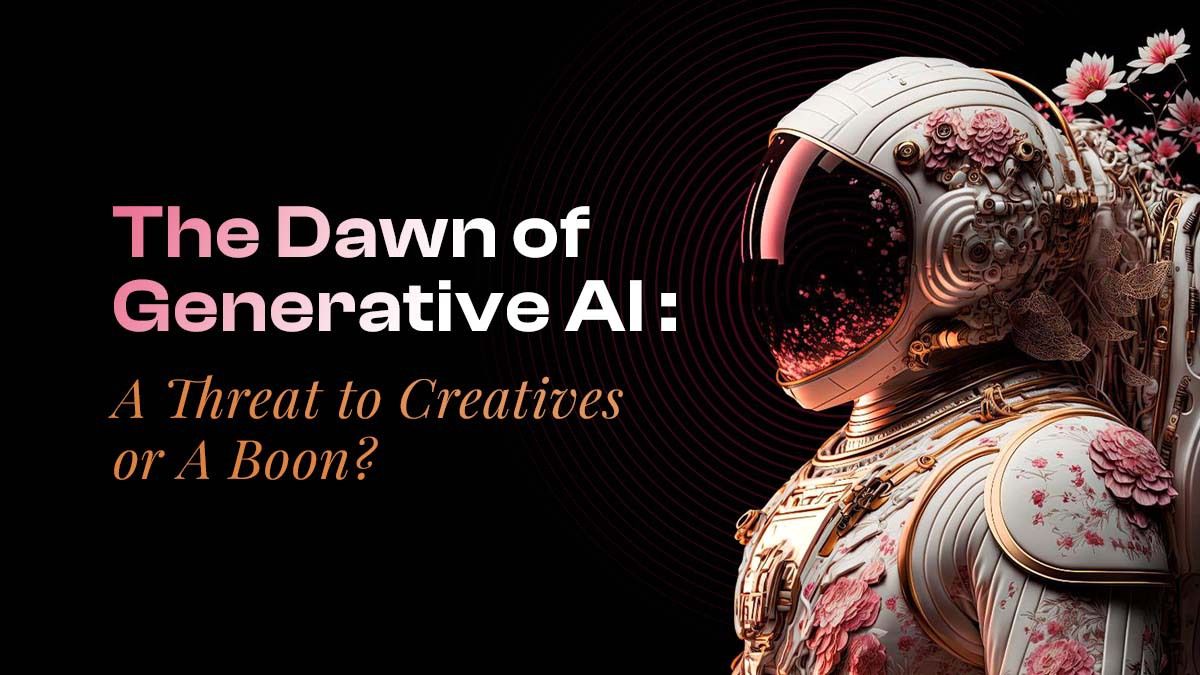
Important note*: every piece of artwork in this article came out of Midjourney.
Is generative AI a boon or a bane for creatives? Mostly a boon, for people who learn to use it. It speeds up drafts, variations and production, and it will replace some routine creative tasks. Taste, judgment and the final call still sit with people, and that is where we think creative work is heading.

For us, AI is the Wingman in Creating better UX
Talk to Us
Traditional AI: The Past
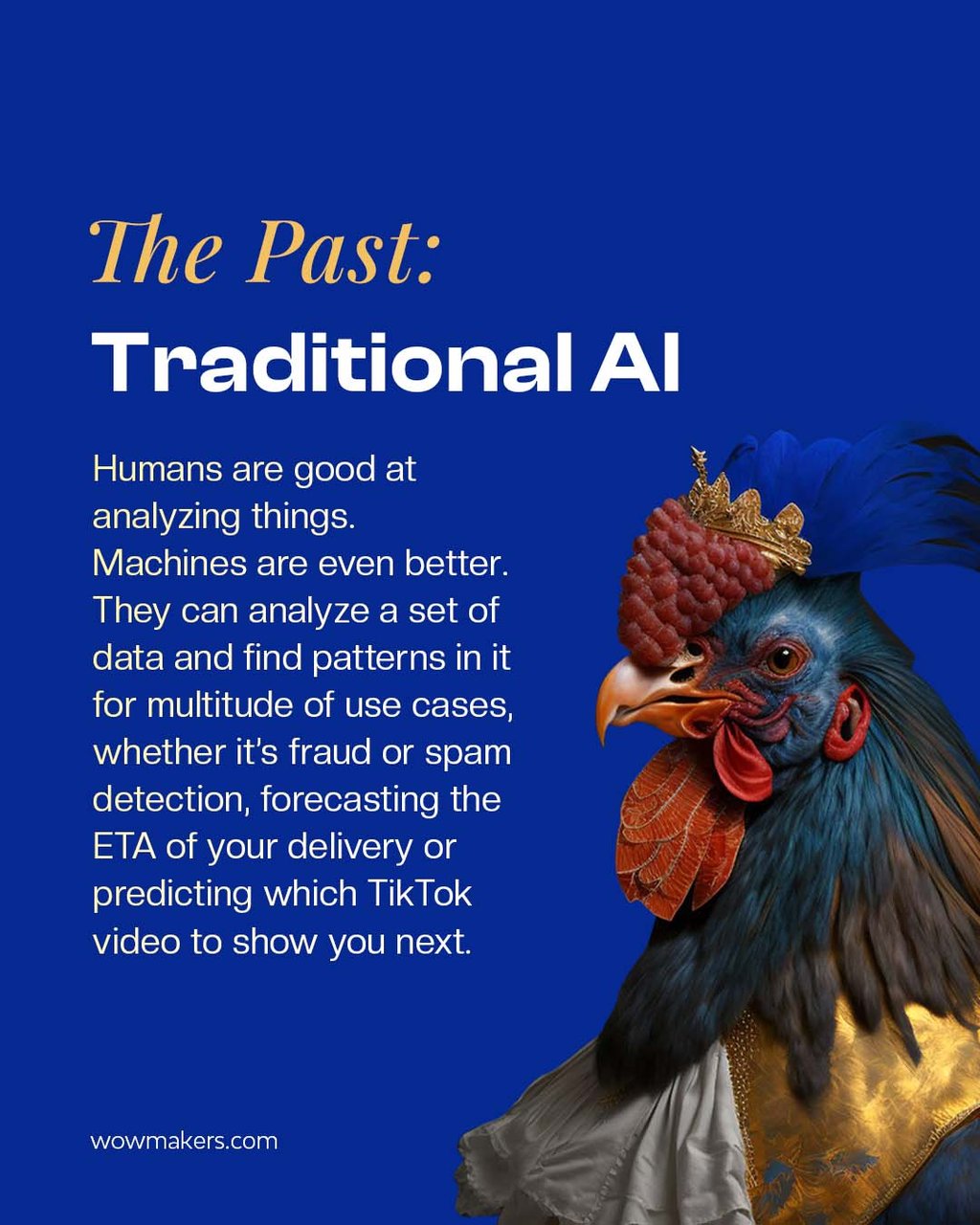
People are good at analysis. Machines are better. Feed one enough data and it'll spot the fraud, catch the spam, tell you roughly when your delivery will show up and pick the next TikTok you'll watch.
Every year they get sharper. This is “analytical AI”, the traditional kind, and it's only the tip of the iceberg. Generative AI goes further.
What is Generative Artificial Intelligence?
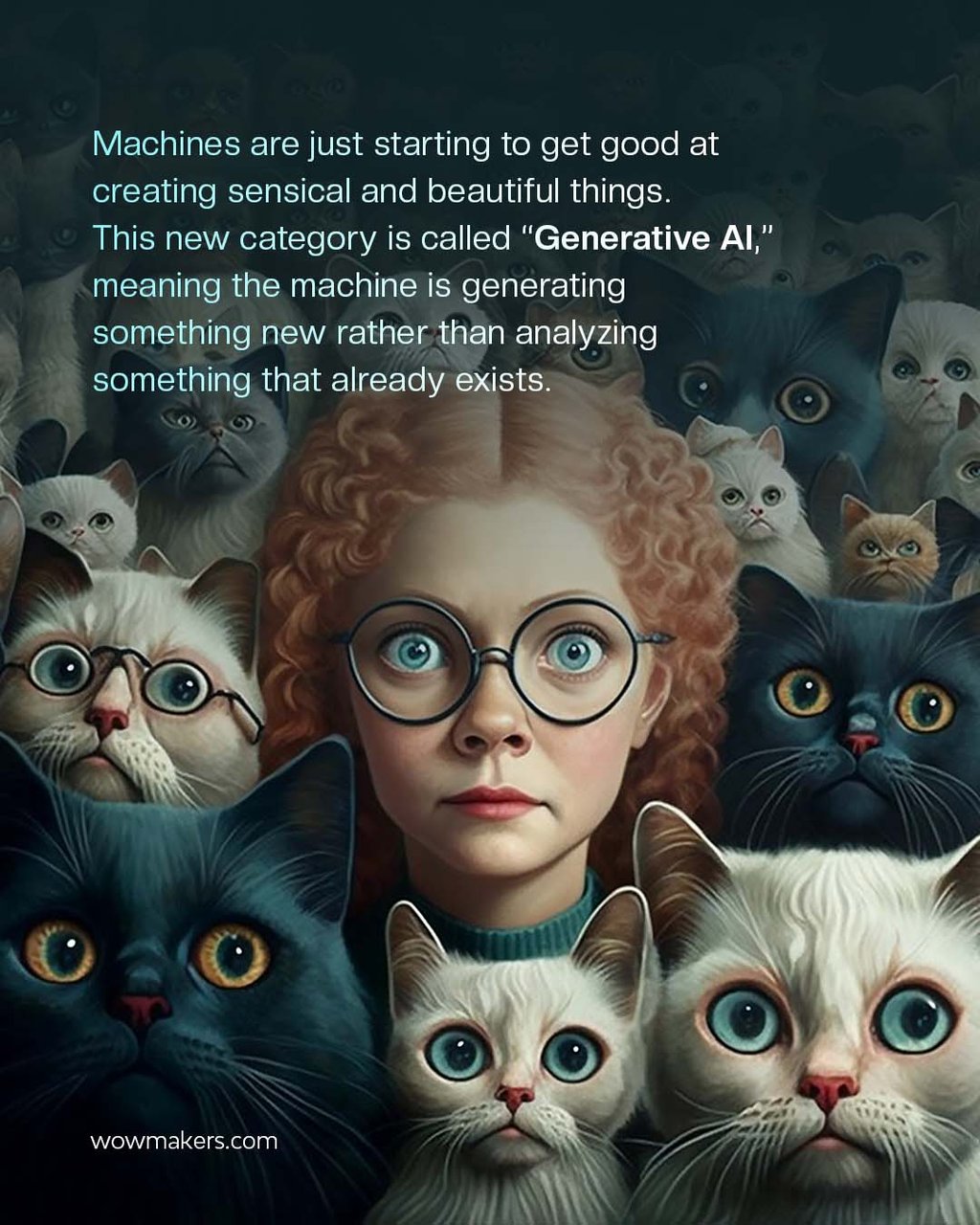
So what is generative AI? AI that makes things. Ask it for a lighthouse painted like a 1950s travel poster and you'll get one nobody has seen before. It learned from huge amounts of data what lighthouses and posters look like, and it decides on its own how to put them together. No one wrote step-by-step instructions for that picture.
Businesses like it for one reason above the rest, and it's speed. New content comes out far faster than anyone could code it by hand, which opens new ways to engage customers. How far it goes is anyone's guess, ours included.
Generative AI: The Present and Future
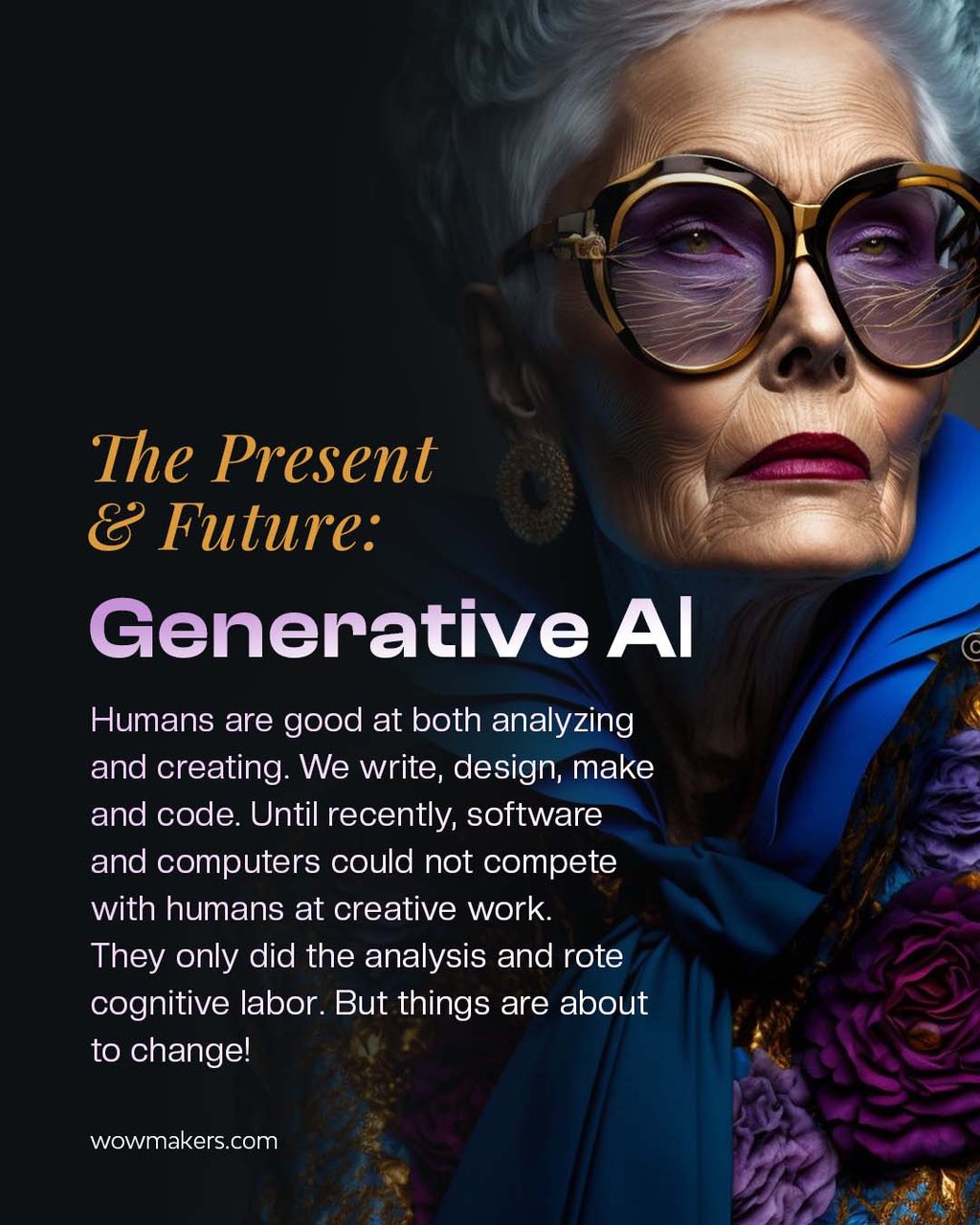
For decades, software couldn't touch people on creative work. It analysed things and handled repetitive thinking, and that was it. Now machines have started making things that are actually nice to look at. Hence the name. The machine generates something new, instead of judging something that already exists.
Below, we look at what generative AI is, the ethical knots it creates and where it's used today, then at where it seems to be going.
Words speak little when you can see for yourself.
Check Our Portfolio
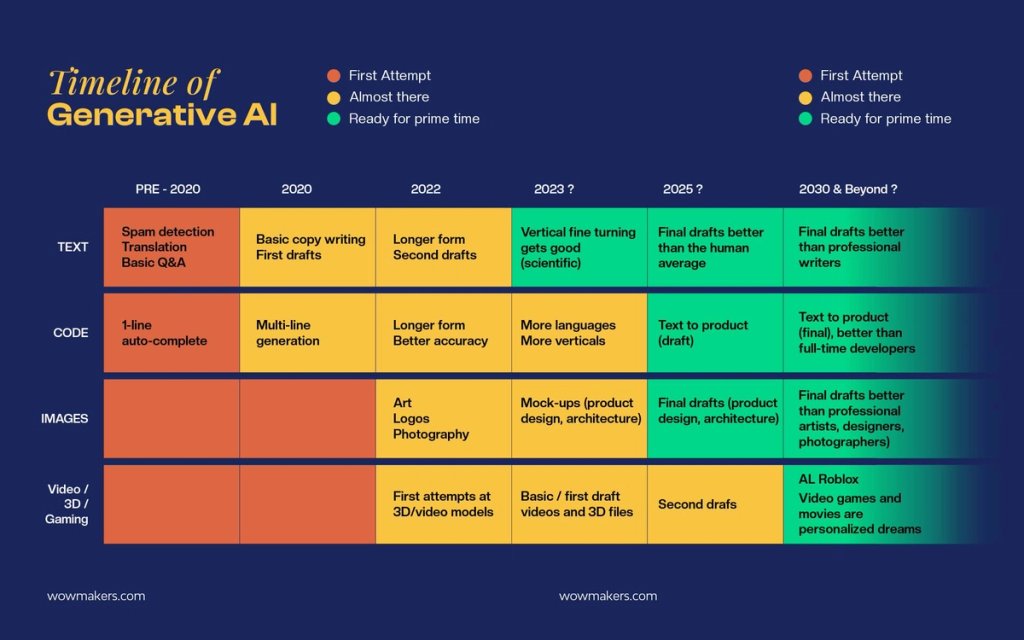
Timeline Of generative AI
The timeline below shows how generative AI developed, up to the image and text models that arrived in 2022.
Different Types of Generative AI
- Image Generation: a model can build a brand-new image from scratch with only a few inputs. That's useful for digital art and photo manipulation, realistic or surreal, and it saves hours of manual work. DALL-E, Stable Diffusion, Midjourney and Lexica have made it simple for companies to start using it.
- Image-to-Image Translation: the style of one image moves onto another. The basic shapes and colors of the first carry over to the second.
- Text-to-Image Translation: type a description, get a picture. People use it to visualize custom scenes from stories, concept art and product design ideas in ways that weren't possible before. OpenAI's DALL-E, Stable Diffusion, Midjourney and Lexica are the tools most businesses start with.
- Text-to-Speech: written sentences become spoken words with lifelike accuracy and intonation. Plenty of businesses already use it for automated customer service agents and IVR (interactive voice response) systems in call centers.
- Audio Generation: models can produce audio of almost any kind, from natural sounds to music and speech. Some video games and VR simulations already use generated soundtracks that change with what the player does.
- Video Generation: a model can build a clip from scratch using nothing more than a few labels, like “a person walking” or “a car driving down a road”. Animation, film and advertising teams use it to save time and money while keeping more control over their projects. Some studios now make AI-generated brand films end to end, with people writing the script and choosing every shot.
- Image/Video Resolution Enhancement: thanks to new noise-reduction techniques from researchers, models can push an image or video past its original resolution and lose very little detail.
- Synthetic Data Generation: some fields don't have enough real data to train a traditional machine-learning model. Medical research and self-driving car programs are two. Their simulations need huge datasets, and collecting real-world data isn't always possible for ethical or budget reasons. Generative models get around this by producing synthetic data modelled on real-world data.
Generative AI news from early 2023
- Picsart has added personalization features to its digital production platform. They launched in December 2022, a month after its AI writing and image generation tools. Its AI Background and Replace tools carry generative AI past the first draft and into editing, so users can swap out objects and build new backdrops.
- USCO (United States Copyright Office) revoked the copyright protection it had granted in September to the AI-generated images in the comic Zarya of the Dawn. The office said the registration went through before it learned that Midjourney had made the comic's artwork.
- Expect OpenAI’s ChatGPT to keep improving as the company makes it more conversational. You can already tell it what to write with a simple instruction, instead of typing the start of a piece and letting it finish.
- Electronic health records (EHR) are hugely valuable in healthcare, yet experiments today still run on real patient data. Google recently backed a study that proposes a generative model to synthesize this data instead, and the paper on Research Square lays out how it works. The finding is that the synthetic data is almost identical in quality to real data and performs close to ideal on practical privacy metrics.
- Generate Biomedicines, a pharmaceutical company in Boston, has launched Chroma, billed as the “DALL-E 2 of biology.” Biologist David Baker's research group at the University of Washington has built a similar technique called RoseTTAFoldDiffusion. The idea is to design reliable blueprints for new proteins that can then be made in a lab.
- Adobe Stock now accepts images made with generative AI, as long as they meet its strict guidelines.
Generative AI Market
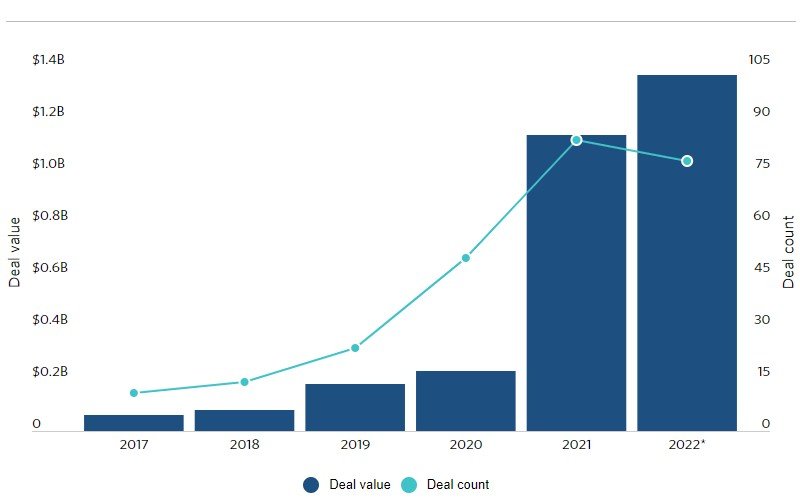
Source: Pitchbook
Benefits of Generative AI
One example from early 2023 is the Indian startup Hexo, which offers an open-source image generation API. Businesses can build their own image engines on it, tuned to their products, design language, characters and IP. Filmmakers can use it for personalized storyboards, animation and VFX.
- It can come up with new answers to old problems, including scenarios, products and services nobody has seen before.
- Uniqueness and scale used to pull against each other. Make a one-of-a-kind thing in bulk and it stops being one-of-a-kind. Generative models change that, because they can produce a unique answer for each problem or each group of users. Today you might put on a road-trip playlist someone else made. Soon you'll generate new songs that fit the occasion, your mood and who's in the car.
- It can model complex systems and find patterns in data that would otherwise take a lot of manual effort, which gives a clearer view of the trends and interactions inside a system.
- It can find new combinations of features, which may lead to new applications or better versions of existing ones.
- It saves businesses time and money by taking manual data processing and analysis off people's desks. And because the model does the analysis, there's less room for human bias in the insights.
- It helps organizations spot threats sooner, because automatic pattern recognition lets them monitor far more of their environment.
What are the ethical implications of generative AI?
A children's book written with AI caused a stir on Twitter and set off a heated argument about machine-made art. Ammaar Reshi, a product design manager in the San Francisco Bay Area, wrote “Alice and Sparkle” using OpenAI's ChatGPT. People were impressed by what the tools could do. Plenty were also worried about how quickly technology is replacing people in some industries.
The ethics get messier as the models improve. We'd rather ask the awkward questions now. Here are the three we keep arguing about:
Should a program be able to attribute the results of its outputs to itself when those outputs are derivatives of many inputs?
People have argued this one in circles. Some give the rights to the human creator, some to the developer. The popular take is that generative AI is a tool for whoever uses it, like Photoshop or any other image software. Nobody credits Photoshop for a poster.
Others think the rights should sit with the AI and the people who built it, so they profit when a model does well.
Developers have a fair claim to credit for their work and their intellectual property. But try splitting an output into who owns what. The data came from all over the place, and so did the algorithms. That line is very hard to draw.
And AI is reactive. It doesn't wake up with ideas. However advanced a model gets, people still pick the training data, set the parameters and tweak the algorithms. Those are human decisions, mostly.
So giving the AI sole credit for an idea or a piece of work would be misleading. Credit belongs to the people who designed and trained the model, and to everything else that fed into the output. That's how we see it as a studio, too. The tool doesn't sign the work.
How should we manage “deep fakes,” which can be used to create false or misleading information about individuals or organizations?
Deepfakes are the scarier question. A convincing fake video of a real person, saying things they never said, can spread false or misleading information about them or their company. Left alone, it will be abused.
We'd want firm rules on how deepfakes can be used, with real liability attached. Fines, for example, for people and organizations that ignore them.
Label every deepfake, clearly, so viewers know at a glance what they're watching. Do that and the risks shrink, and people can still use the technology for the good stuff.
What ethical considerations must be considered when creating AI-generated works that mimic specific human creators?
Then there's style. An AI can churn out work in a specific creator's style, with or without their permission. That's a privacy and consent problem first. It's also a livelihood problem, because the creator could lose work to their own imitation.
Respect the creator's copyright. Ask first if you want their work in an AI piece. Then credit them properly, which also keeps plagiarism and infringement claims off your desk. It's the same courtesy we'd expect if someone used our work.
Openness helps too. If people can see how the model was built and how each piece was made, misuse is harder to hide.
Could AI eventually replace humans?
In some jobs, yes, and fairly soon. Machines keep getting better at work that used to need a person, and job seekers will feel it. The next generation will need different skills from the last, and more critical, creative thinking, to stay ahead of the machines.
It's already in healthcare, transportation, finance, education, marketing and retail, automating manual work and cutting costs.
Speaking as a studio that has swapped tools more times than we can count since 2011, our advice is to keep learning. A new role will ask for more technical knowledge, and for soft skills like critical thinking and problem-solving. Those skills need updating as the technology changes, or the job market moves on without you.
Potential Applications of Generative AI
Human + Machines = Magic
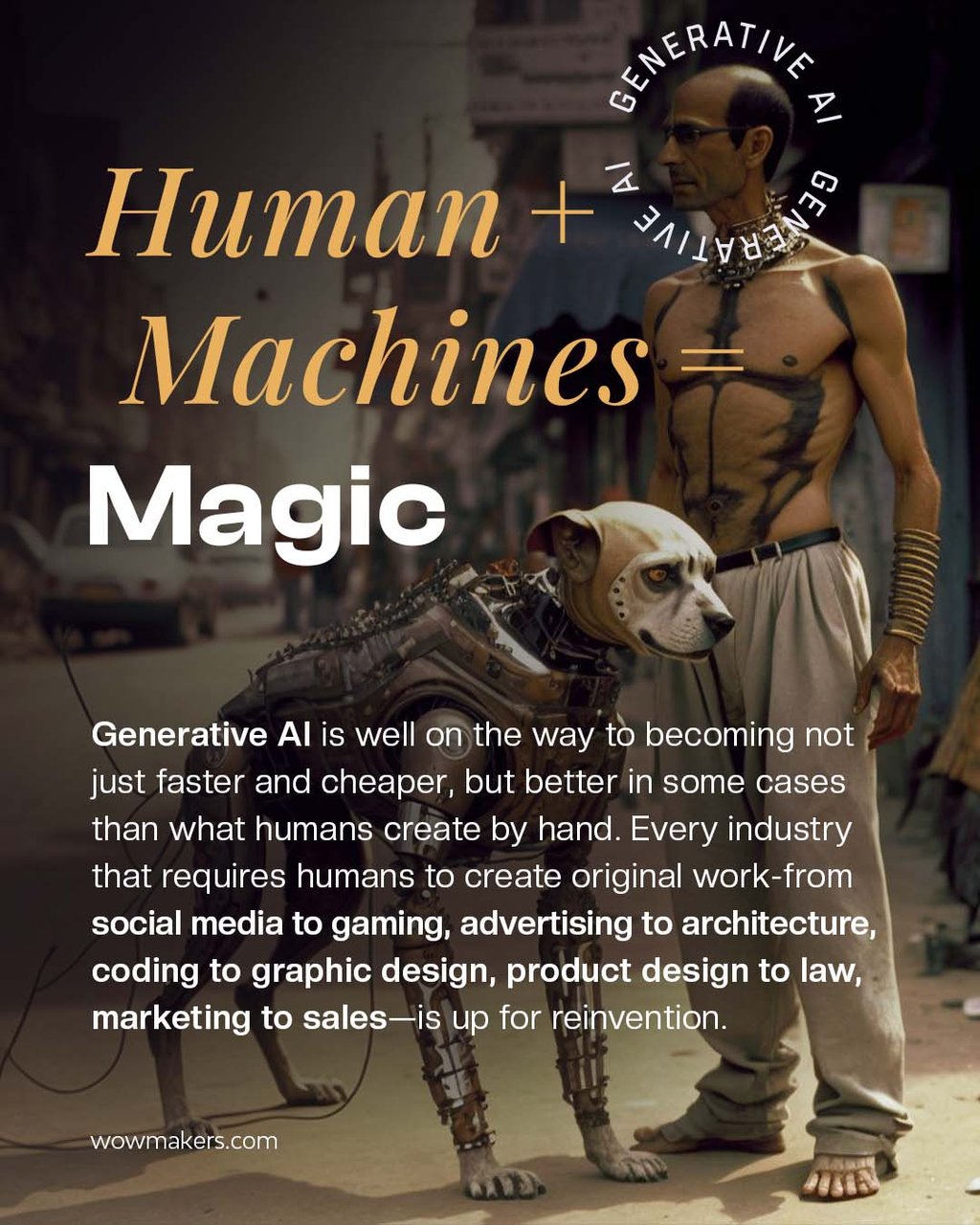
Faster, cheaper, and in some cases already better than handmade. Look down the list of fields it touches: social media, gaming, advertising, architecture, coding, graphic design, product design, law, marketing, sales. Design and video are on it, so this isn't abstract for us. Some roles will go. Others will improve as people and machines pass drafts back and forth. That's the future we're betting on.
AI: Welcome to a Brand New Era of Creativity
Even medicine is changing. Drug companies now use AI to design new drug candidates, which shows how fast AI is getting at hard medical problems.
If you're a professional, entrepreneur or student in any of these creative fields, the best move is to learn how AI is changing your work and adapt.
People who understand what these tools can do will have a better shot at doing well from here. Writers, marketers, coders, architects, graphic designers, musicians, videographers and screenwriters are all paid to go from nothing to something useful. More of them will now start with an AI-generated first idea. That includes studios like ours.
The Impact of Generative AI on the Creative Process
Copywriting
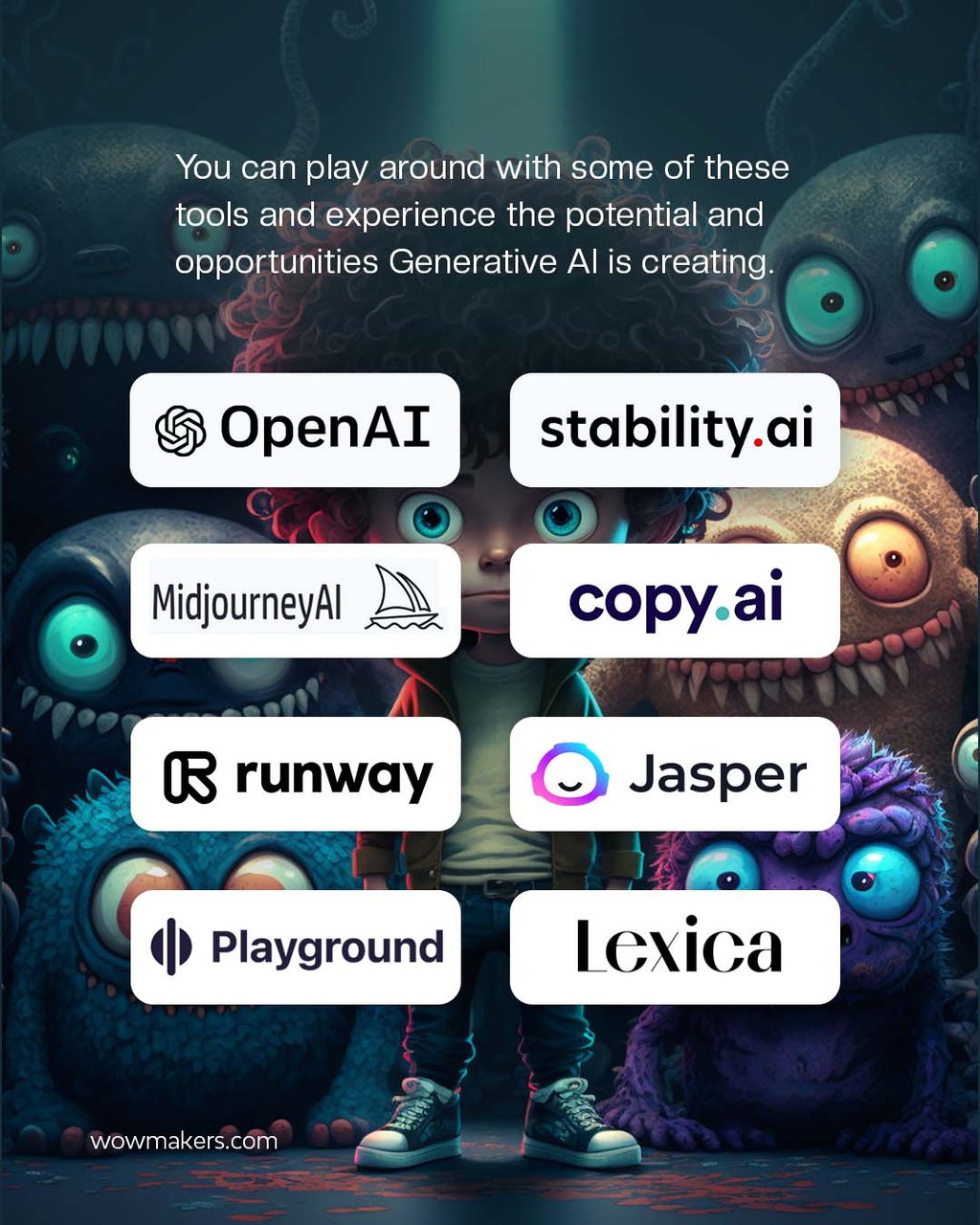
Give it a brief and it'll write anything from a one-line tagline to a long article, fast. Jasper, Copy AI and Playground made this easy for more companies to try. We'd still have a person edit anything that goes out under a brand's name.
Code Generation
Code is closer to our world than you'd think, since websites are part of what we make. A developer describes what they need and gets working code back quickly, so the routine parts stop eating the day. The promise is error-free code that follows current practice. We'd still review it.
Art Generation
It can produce striking art fast. Models that learn from large datasets can create original pieces that would take an artist days or weeks to paint or draw by hand. Every image in this post came from Midjourney, for what it's worth.
Vertical-specific writing assistants
A contract and a medical report don't read alike. With natural language processing (NLP), a model can study the existing writing in a vertical such as law, medicine, finance or engineering, then draft tailored content on demand, faster and without a drop in quality.
Gaming
In gaming, a model can learn how a game plays and design better, more fun levels. It could even use facial recognition to build characters around each player.
Media and Advertising
Advertising gets personal, with campaigns shaped around each customer's interests. It can also handle audience targeting and budget allocation, far more efficiently than a person with a spreadsheet.
Design
For designers, it can learn design trends from data and help turn out good-looking assets for websites and products quickly. It can also give feedback on how well a design works. As a design studio, that's the part we watch most closely. A model can suggest. The taste still has to come from a person.
Digital Communities
Your social feed is already partly its work. It curates what you see from your profile and interests, which helps people find each other. It also makes a new community easier to join, by shaping the experience around how you use the platform and who you talk to.
Companies that created a buzz with the Generative AI product
Key Takeaways
Related reading: how AI is changing UX design, and the SAMR framework for deciding where AI belongs in a product.
So where does this leave us? Creating original work now takes far less manual effort. Some creative functions will be replaced outright. In the rest, and we'd put most of our own work here, people and machines will trade drafts and get better together.
A computer that makes up a sensible story on the spot, because you asked? We still find that a little unreal. And it's early days. Later on, generative AI will probably matter a lot in the metaverse, building immersive, highly realistic experiences.
Our main worry is that people will trust the output just because a computer produced it. These systems learn from enormous piles of human writing, and nobody has properly checked that writing for quality or accuracy.
Some of that data carries misinformation, disinformation, political bias and social prejudice. These systems aren't fact databases. They mimic how people respond, mistakes and all.
Will it improve? Yes. It'll get more “aware”, and the output will be much better than what you see today. And we've had this job panic before, when computers arrived. The work changed more than it disappeared. We think generative AI follows that path. People who keep learning will find new work in it.